Own the Window.
Vessel schedules. Cargo receiving windows. Export logistics risk.
Discover critical insights on vessel schedules and timing challenges in export logistics. Learn how to navigate uncertainties for better decision-making.
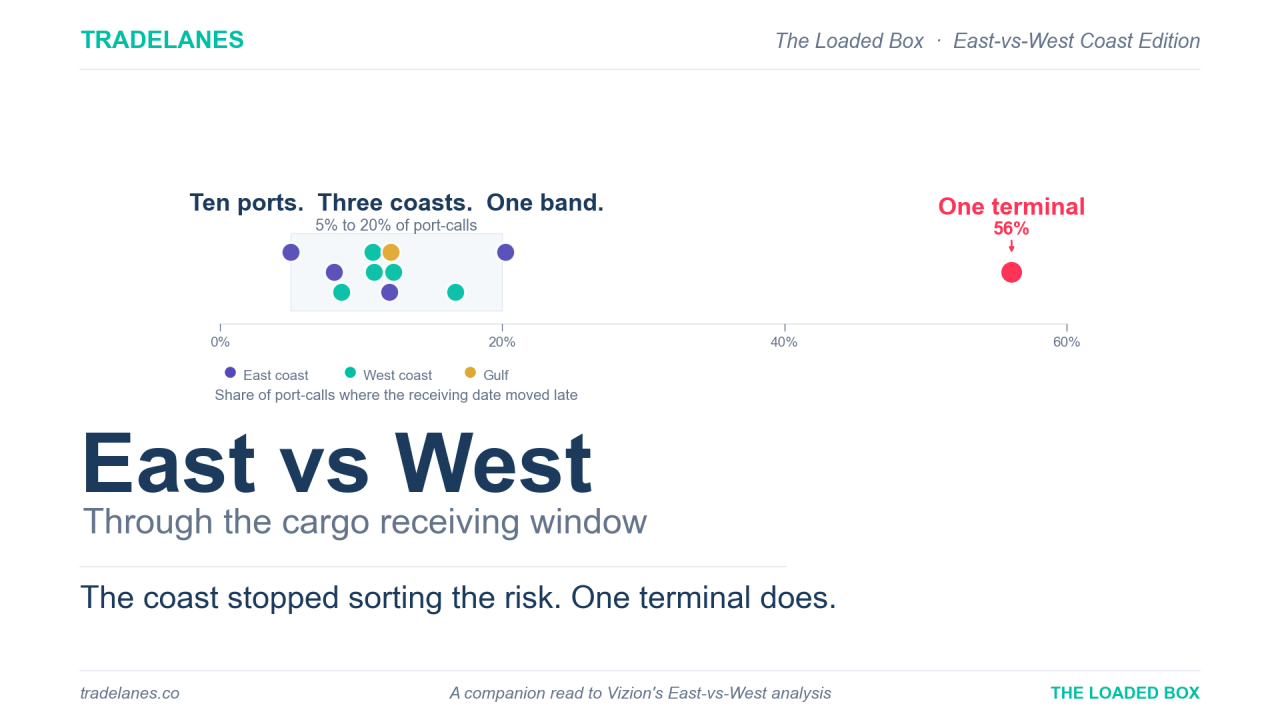
Discover how terminal-specific cargo receiving windows impact export logistics, shifting the focus from coast-wide trends to individual terminal reliability.
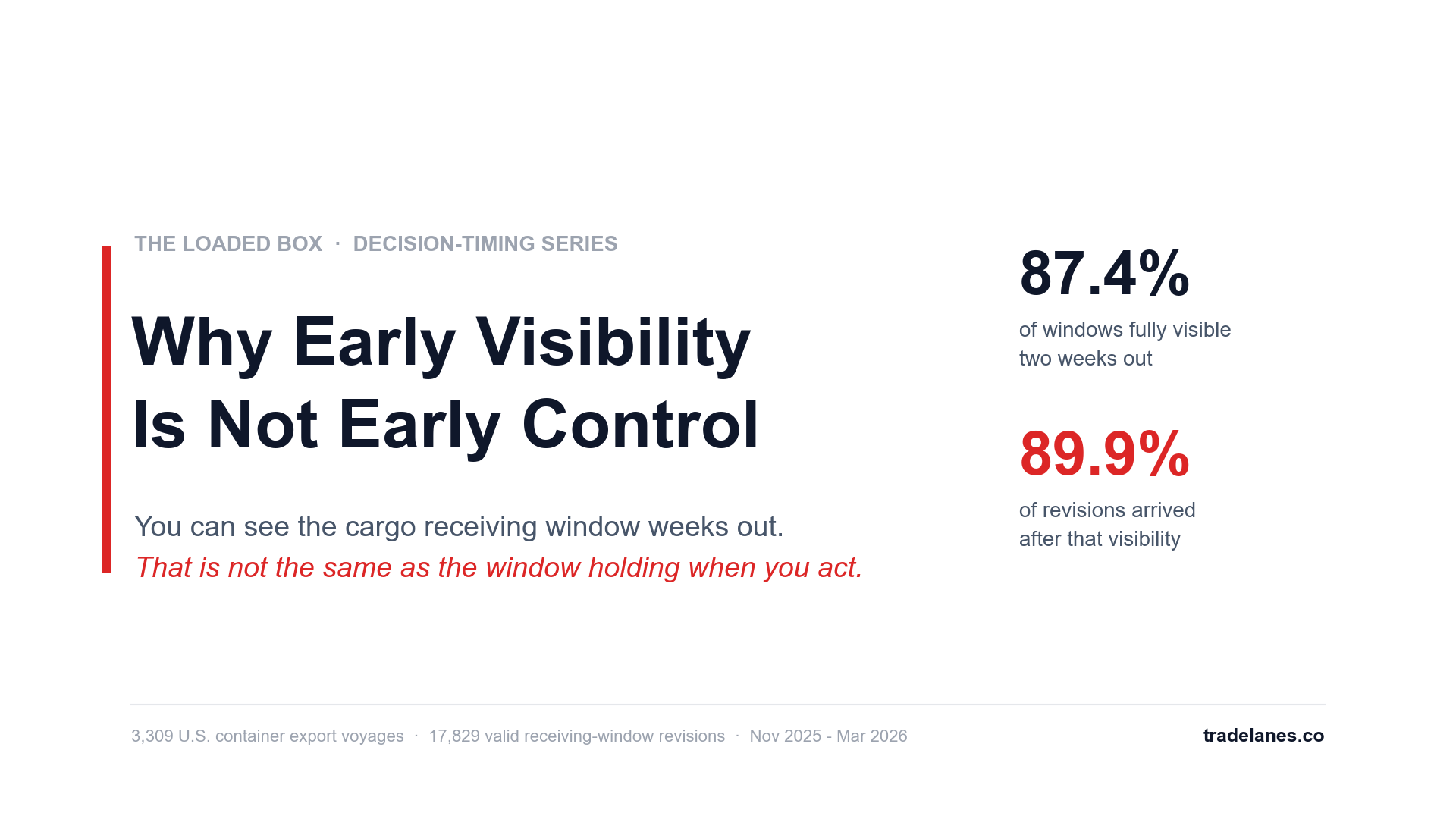
Discover how early visibility of vessel schedules does not guarantee control. Learn about the timing gap that can impact your export logistics.
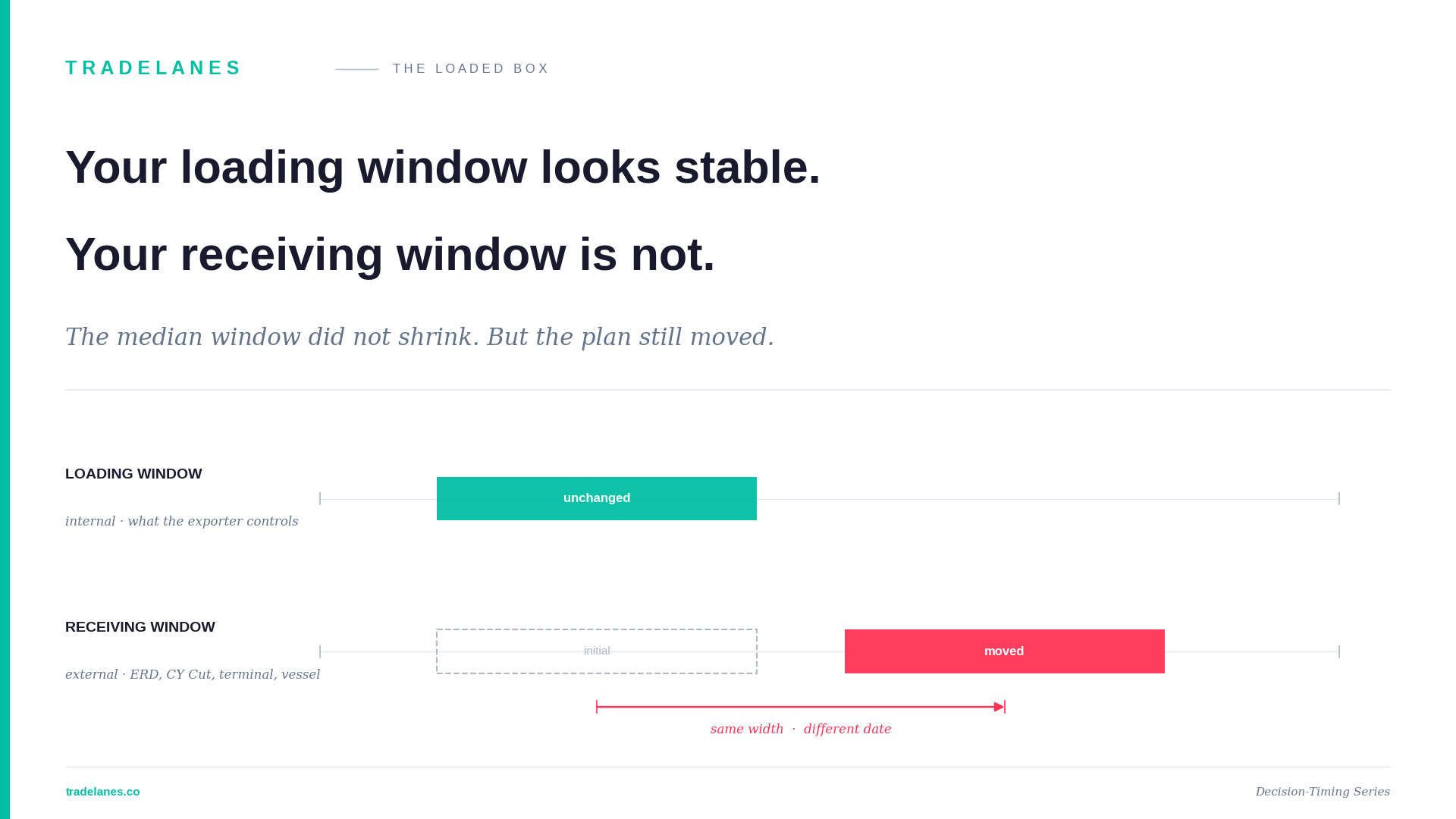
Discover the critical differences between loading and cargo receiving windows for exporters, and learn how timing impacts execution and costs in logistics.
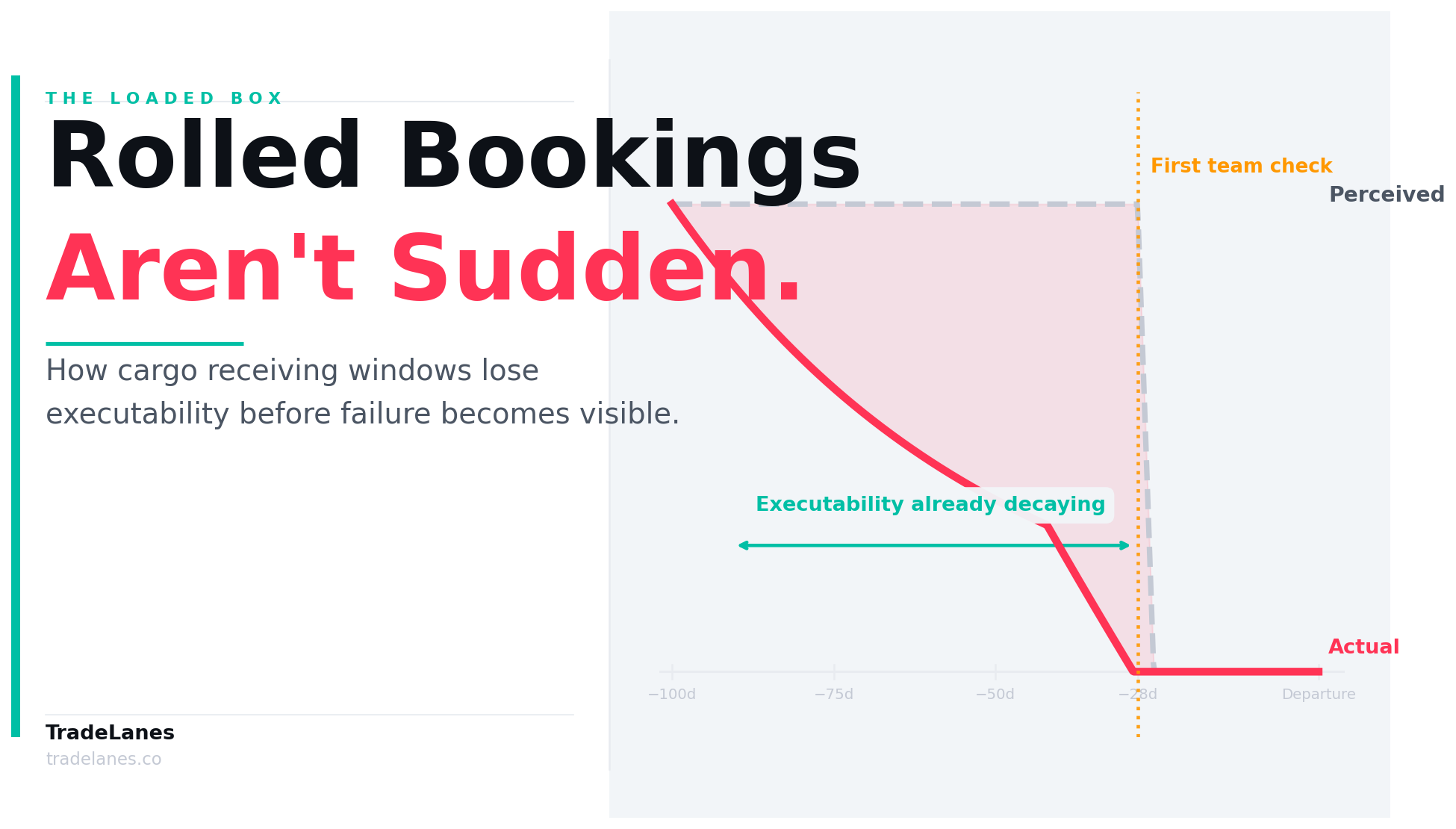
Explore how vessel schedule insights reveal the instability of receiving windows, impacting decision-making for exporters in U.S. agriculture and commodities.
Explore how export teams can better manage vessel schedules and receiving windows to mitigate risks and improve logistics performance in U.S. agriculture and trade.
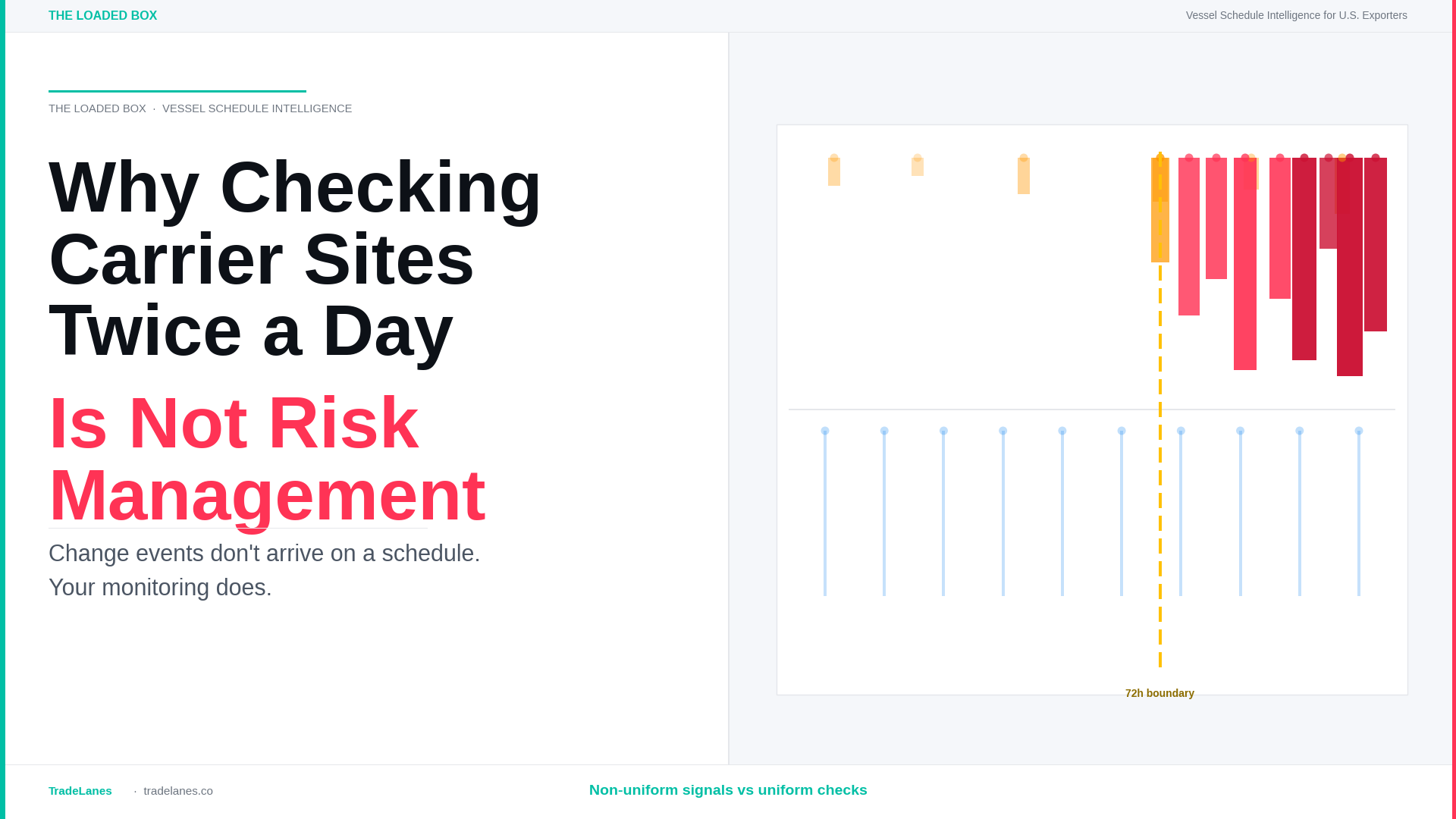
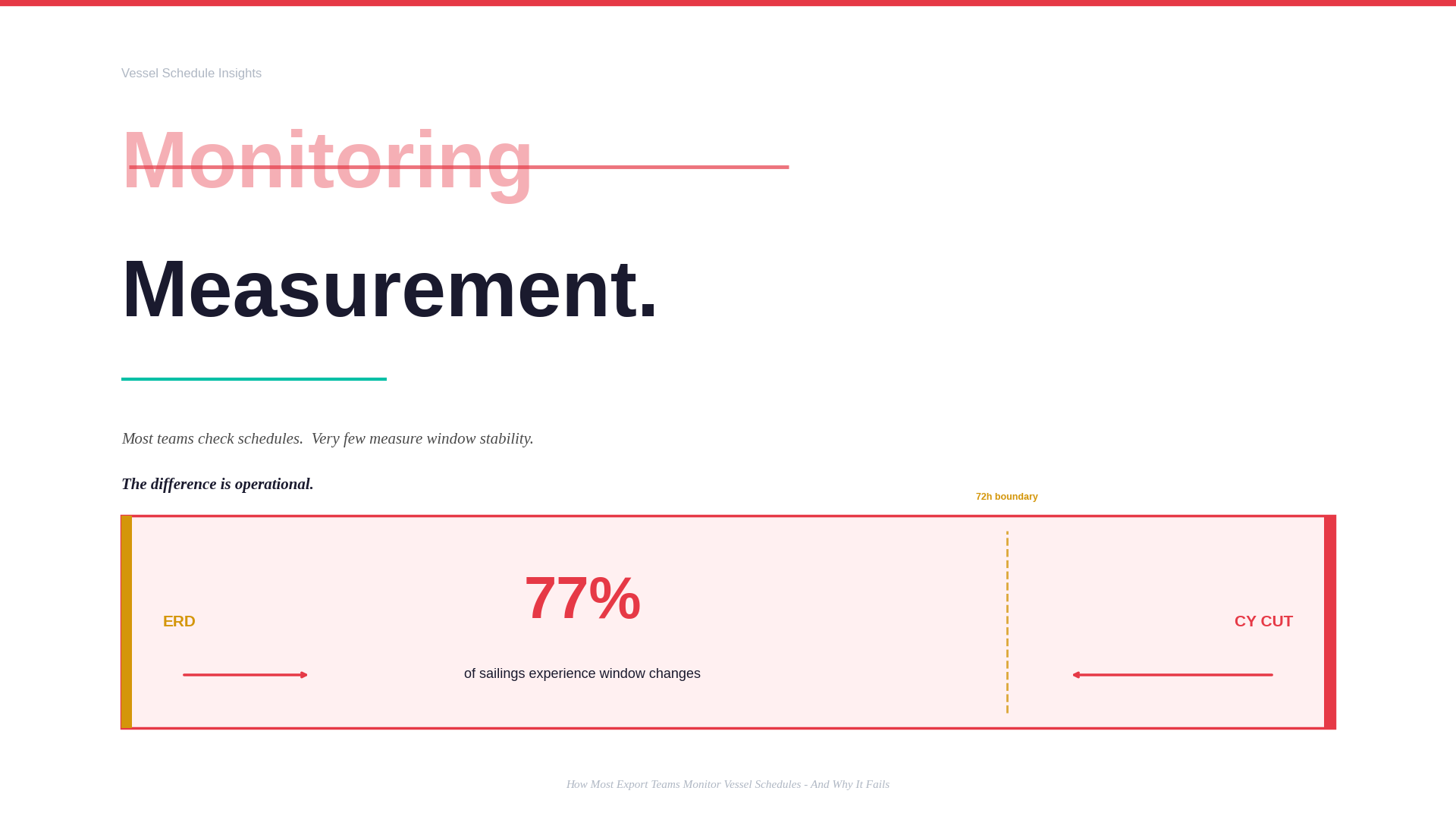
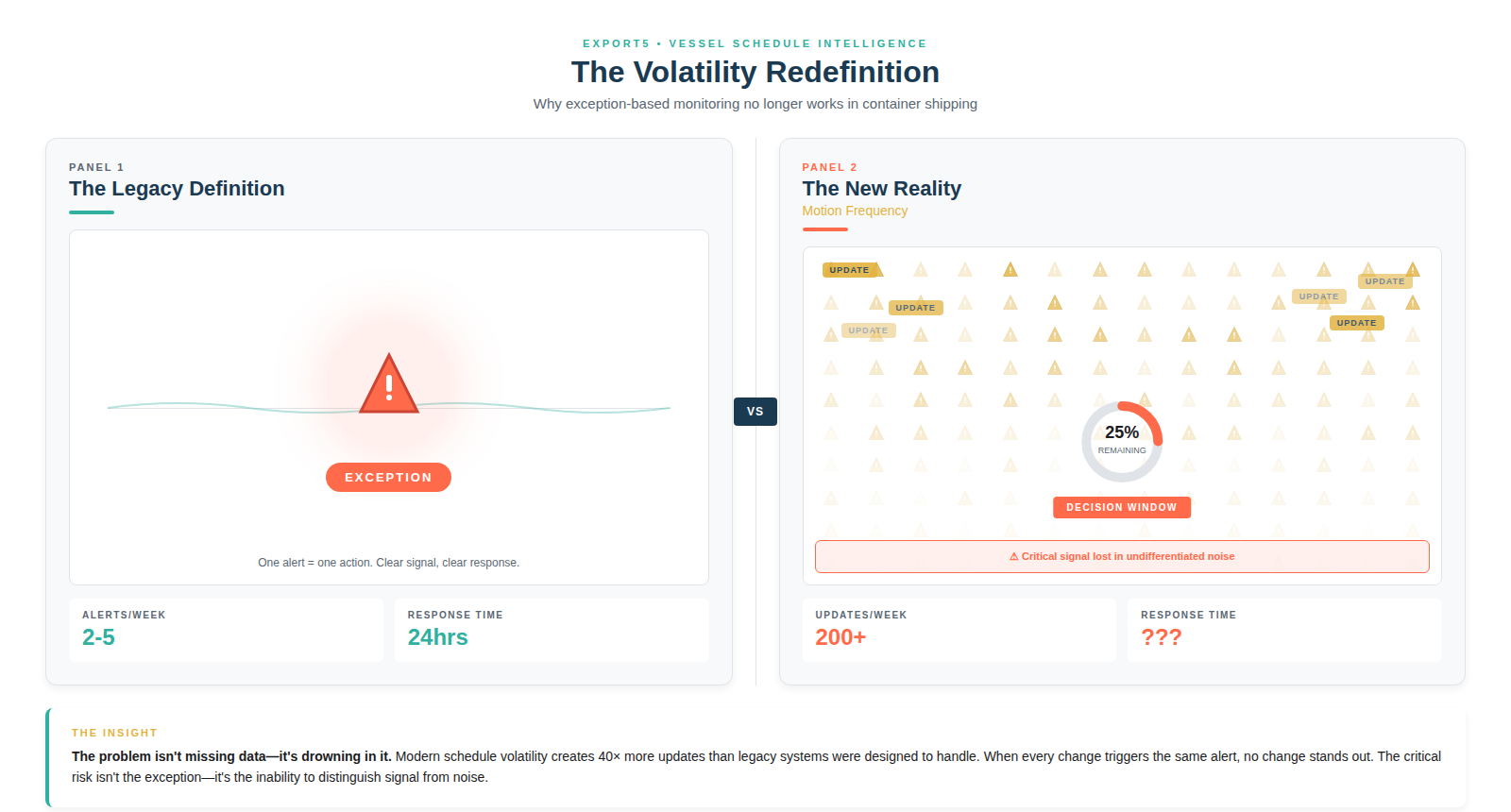
Discover how traditional monitoring of vessel schedules can lead to missed risks. Learn why real-time data is essential for effective export logistics management.
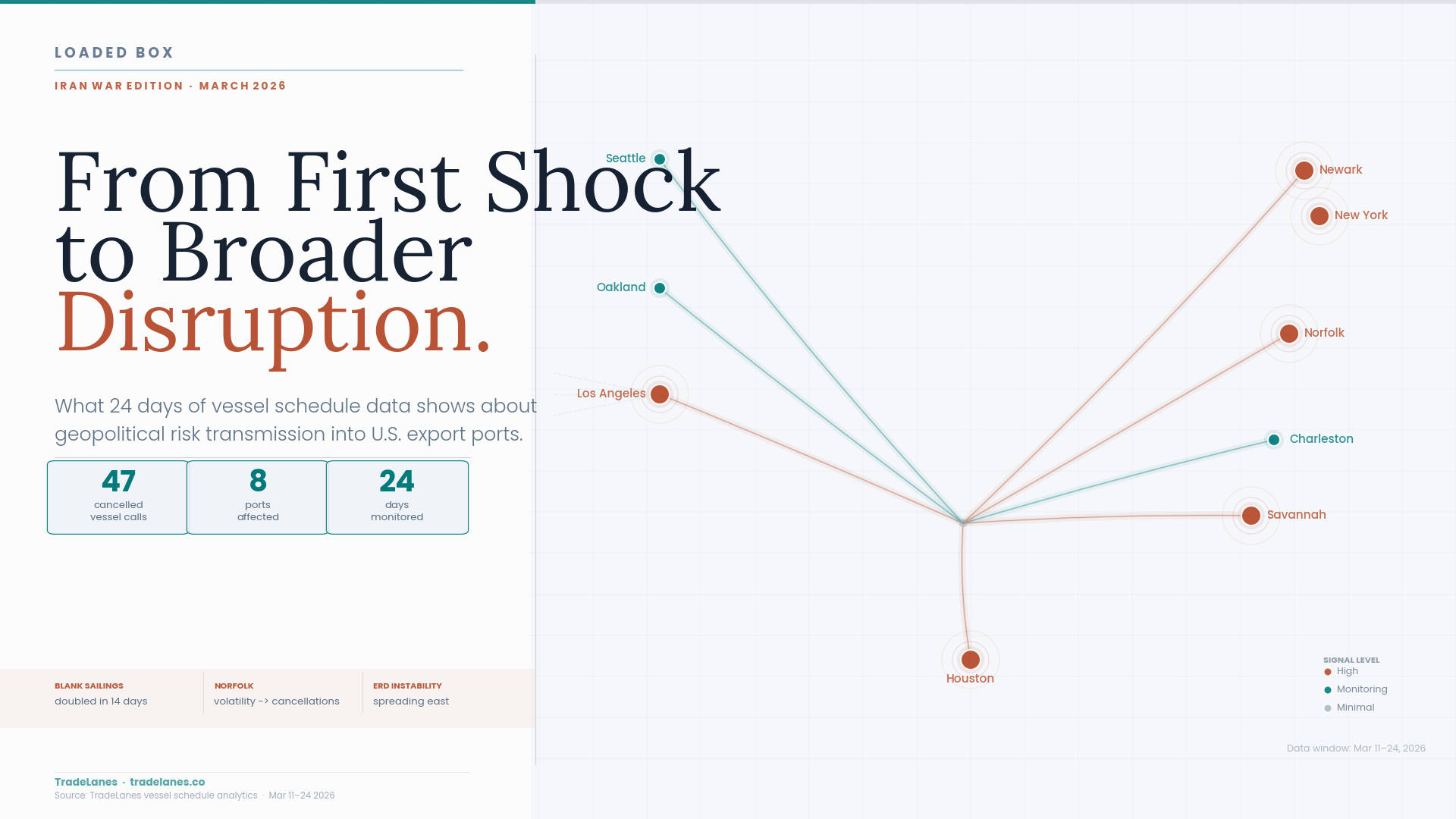
Discover how geopolitical tensions are reshaping U.S. export vessel schedules, leading to broader disruptions and impacting cargo logistics.
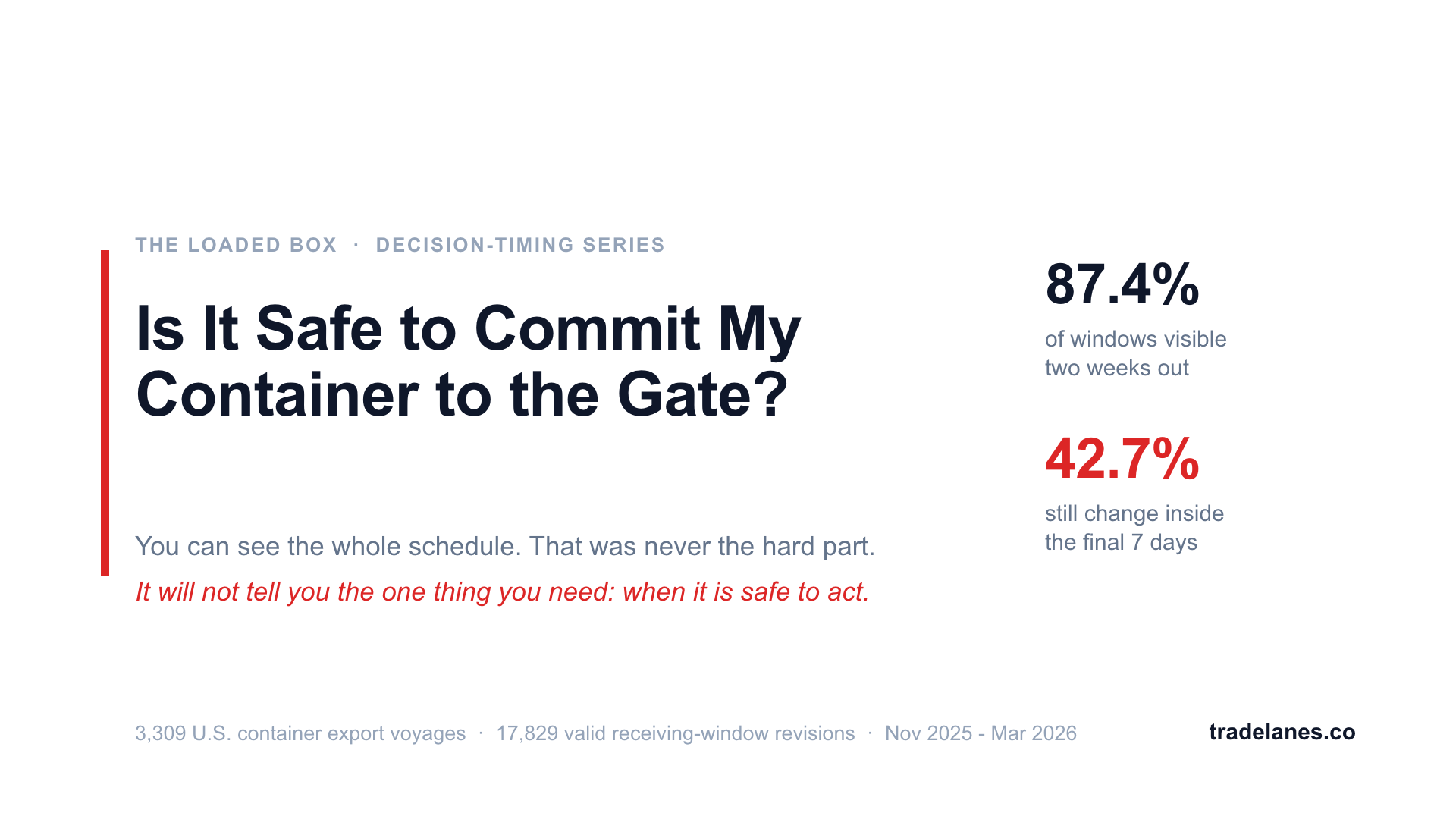
Discover how timing impacts export schedule updates and decisions, emphasizing the importance of late-stage changes in managing global export operations efficiently.
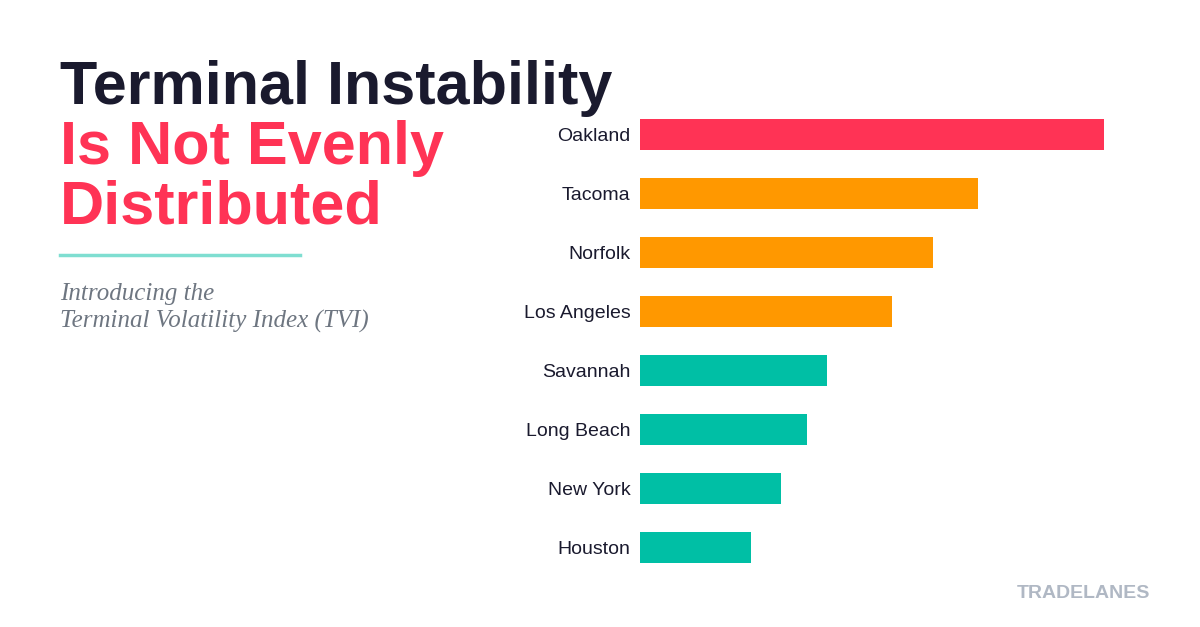
Discover how the Terminal Volatility Index (TVI) measures terminal instability, enabling better planning and risk management for global export operations.
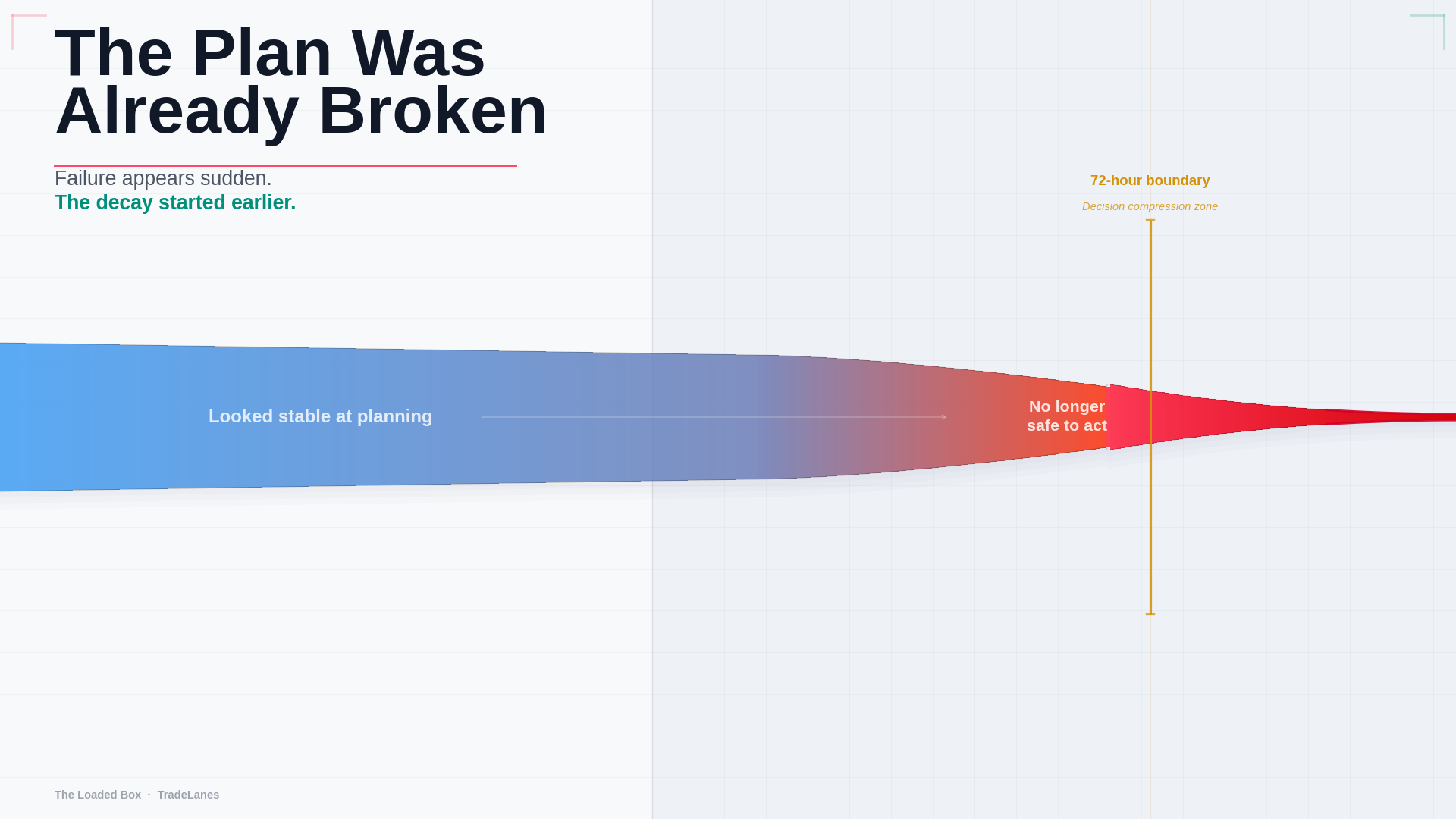
Discover why traditional methods of monitoring vessel schedules fail and how modern boundary governance can transform export operations by addressing structural volatility in global shipping.
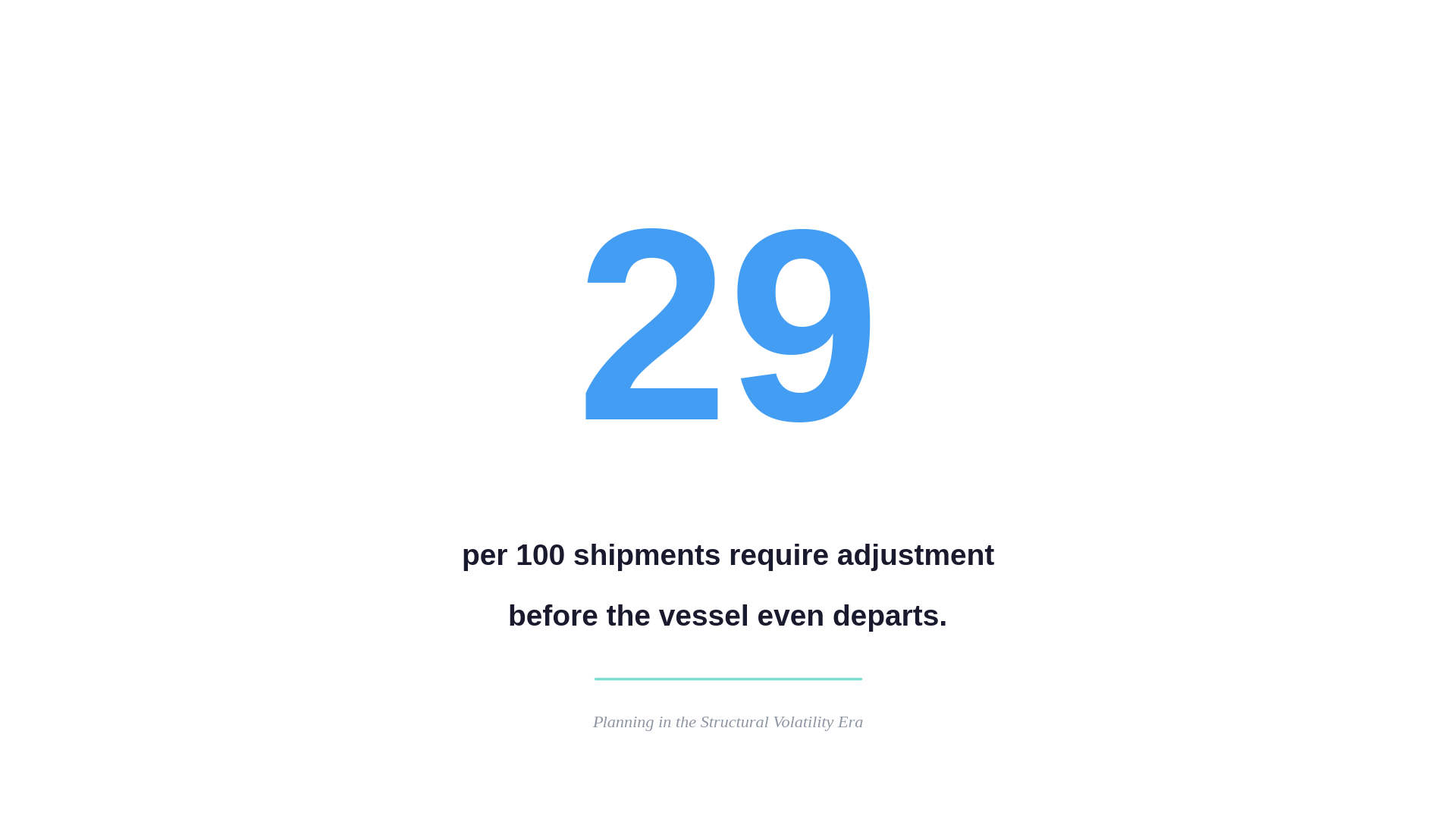
Understand the structural volatility in vessel schedules and its impact on export operations, highlighting labor costs and adjustment burdens for effective planning and resilience.
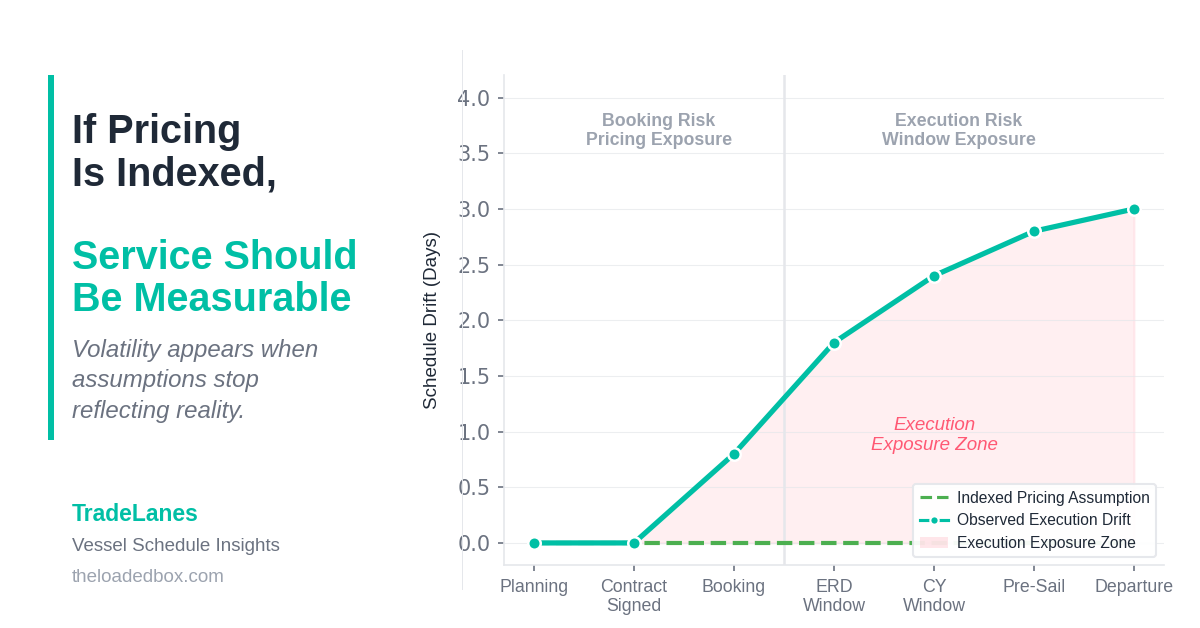
Discover how to objectively measure and manage execution instability in global export operations to enhance service reliability and contractual stability.
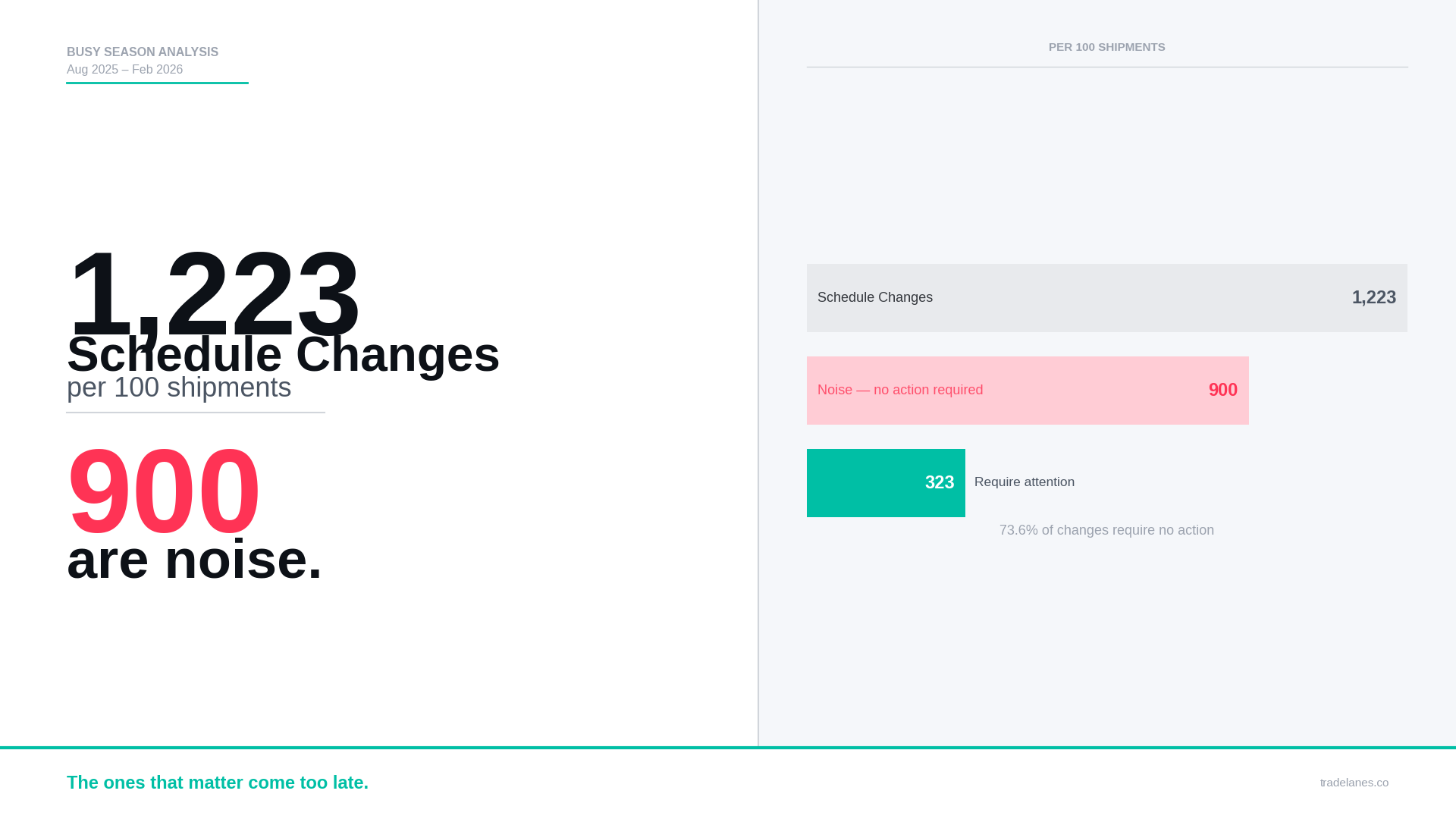
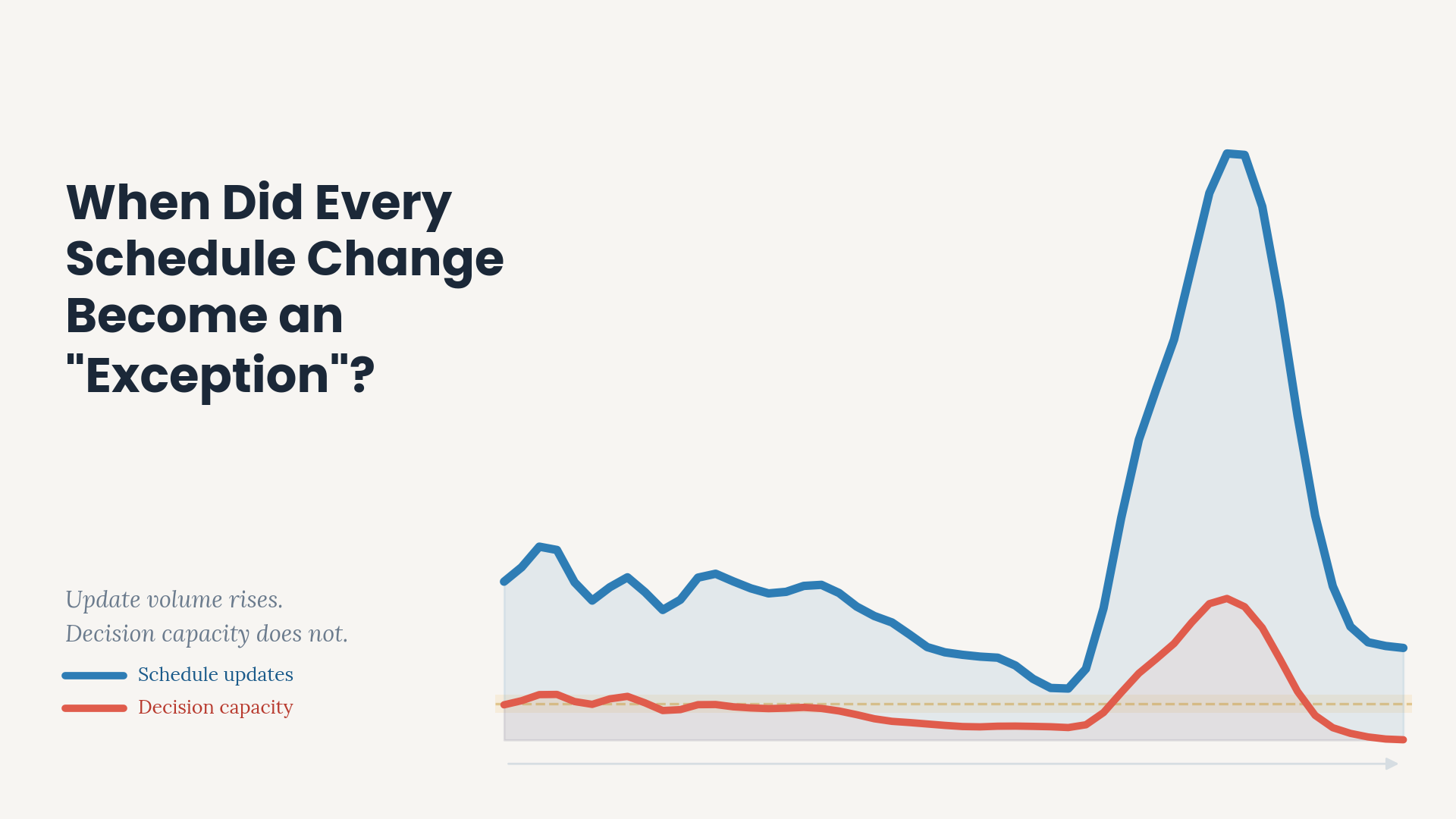
Learn how continuous schedule changes and the overuse of "exception" labels challenge export operations, leading to decision delays and operational risks.
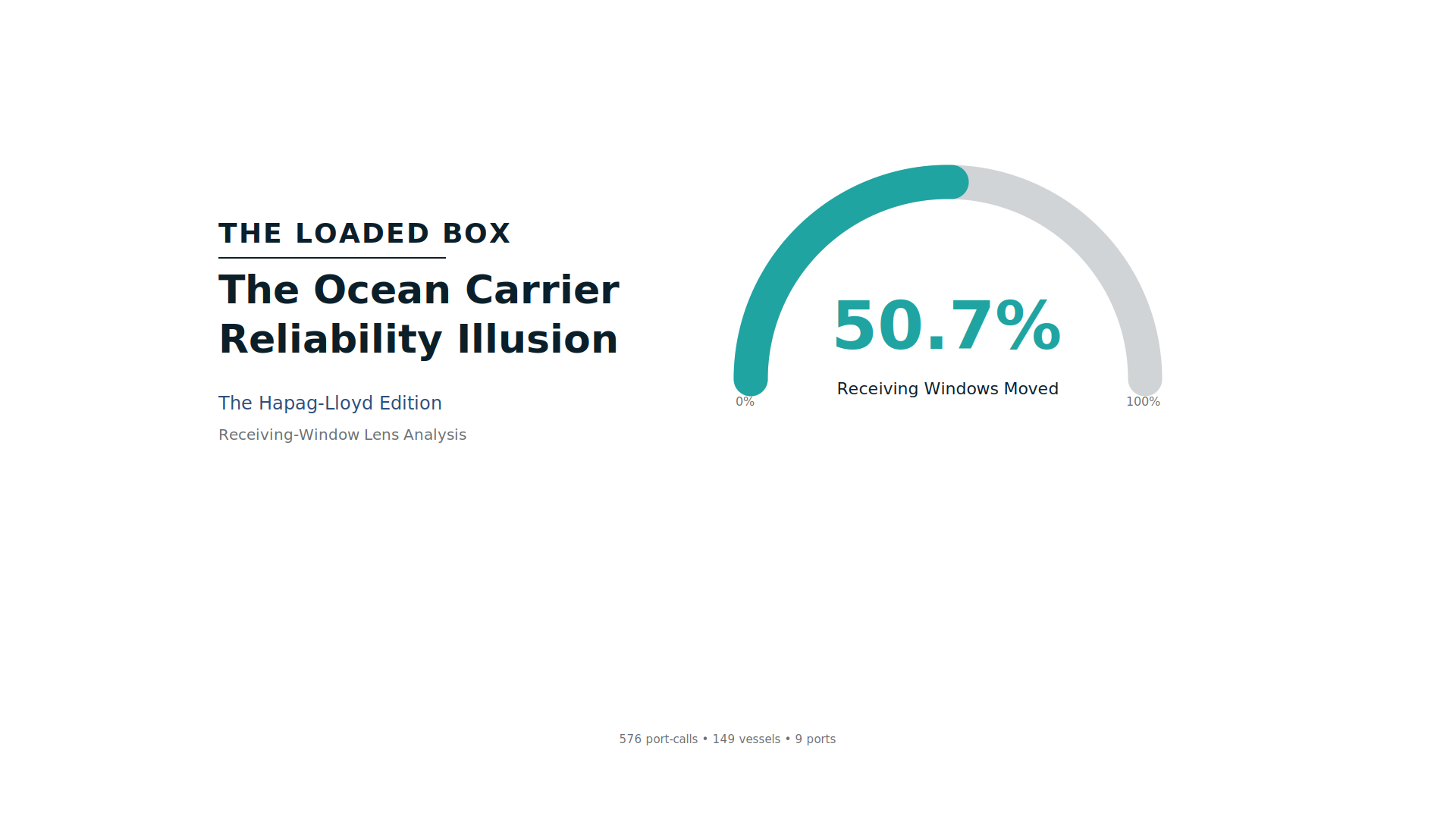
Explore the volatility of Hapag-Lloyd's vessel schedule reliability and its impact on export execution within cargo receiving windows. Discover insights on managing timing risks effectively.
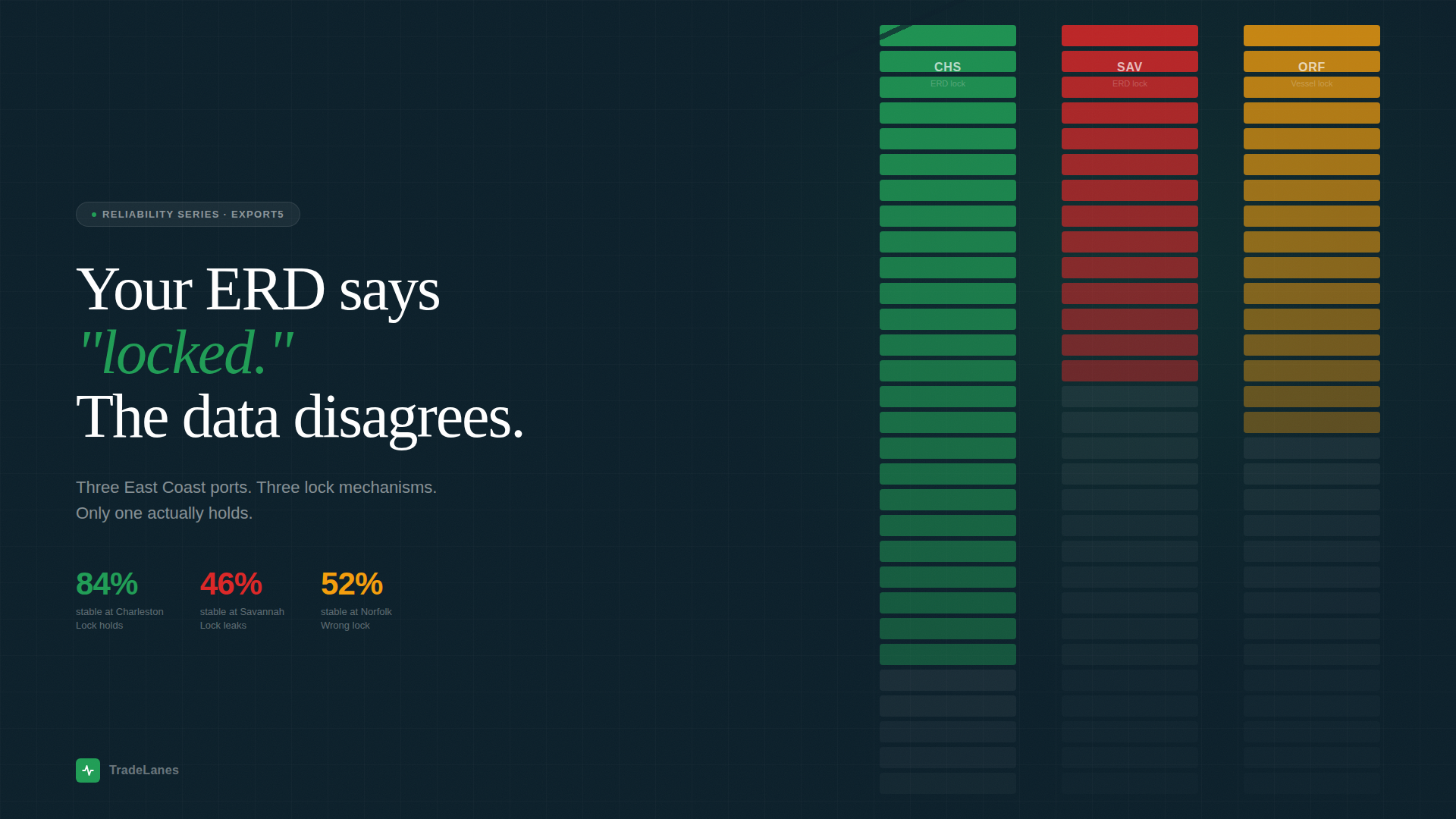
Learn how East and West Coast ports differ in ERD stability and the impact on export reliability. Discover strategies to manage late-stage changes in global trade operations.
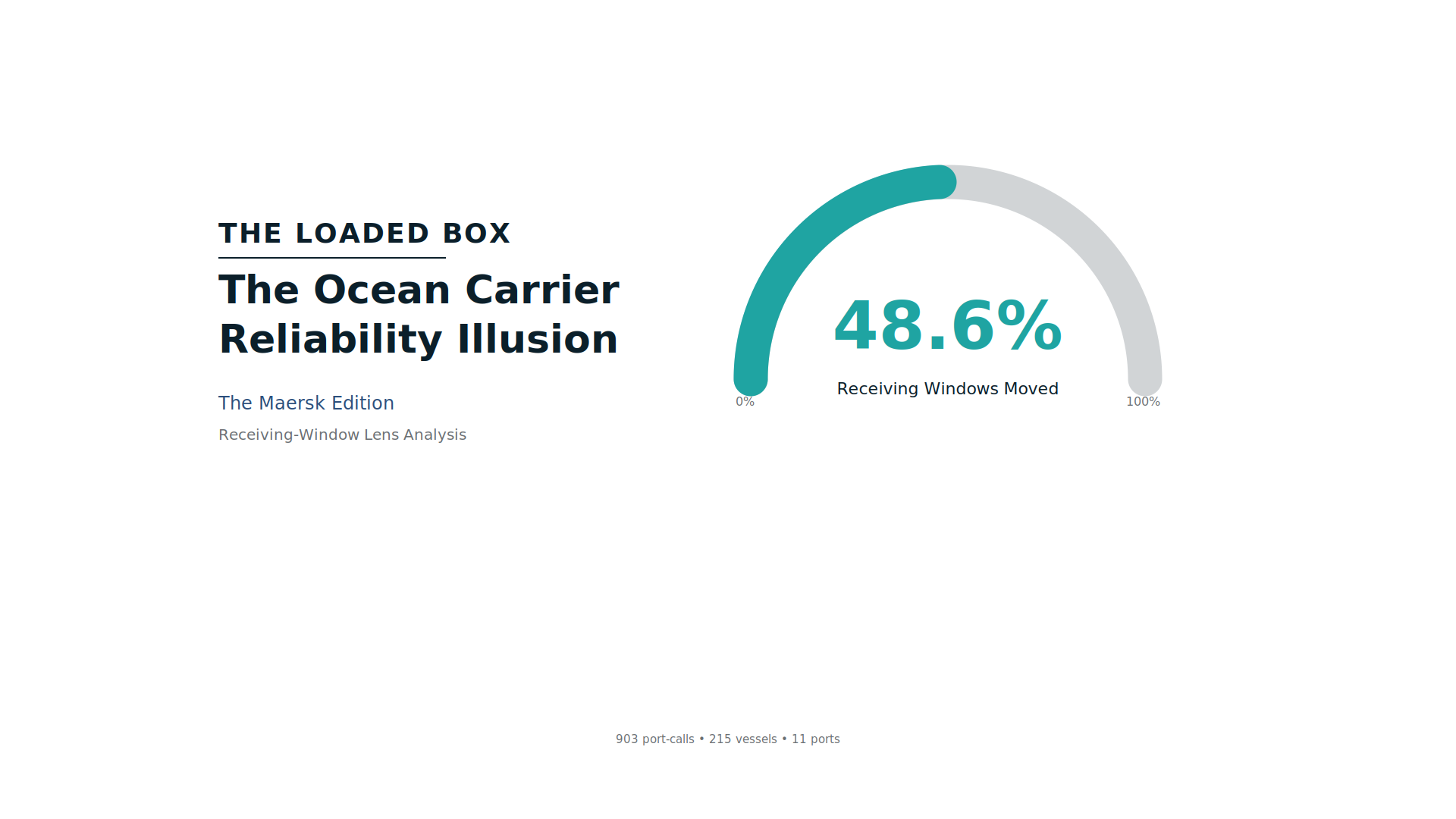
Explore the impact of Maersk's vessel schedule reliability on export execution and learn how to manage shifting cargo receiving windows effectively.
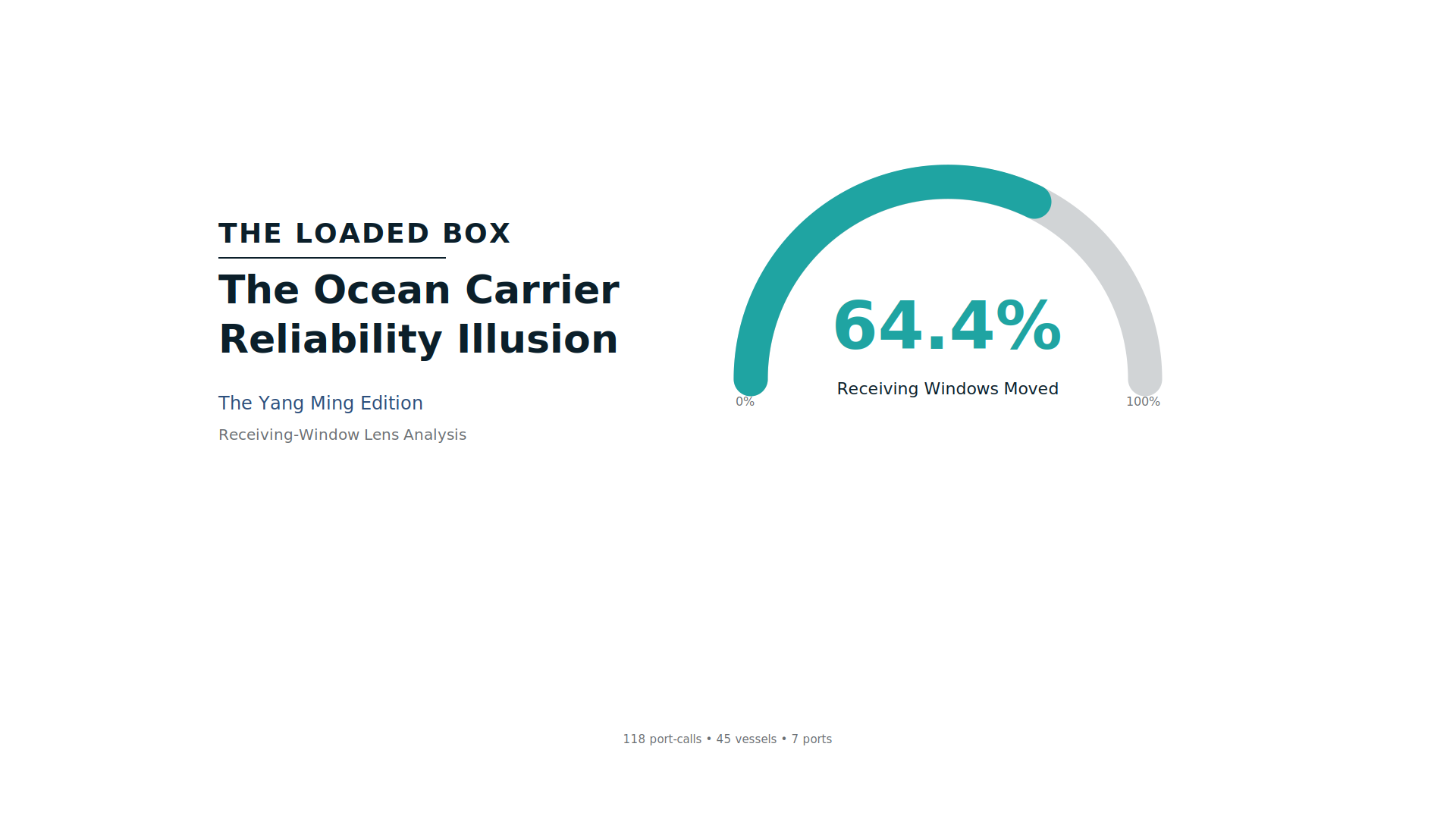
Explore how Yang Ming's cargo receiving windows impact export execution, highlighting the frequency, timing, and port-specific volatility of schedule changes.
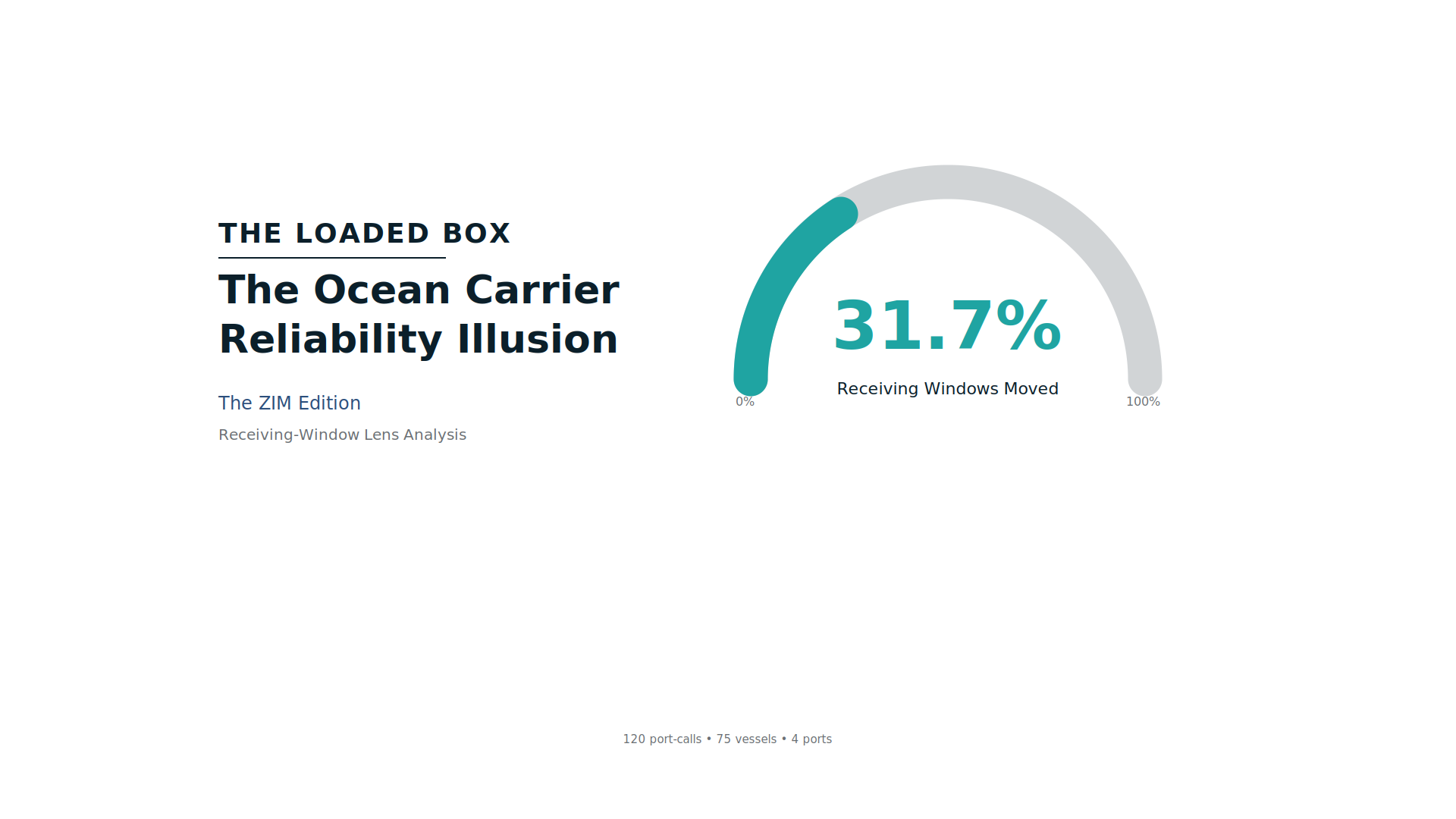
Explore how ZIM's vessel schedule reliability impacts export execution within cargo receiving windows, highlighting where and why disruptions often occur.
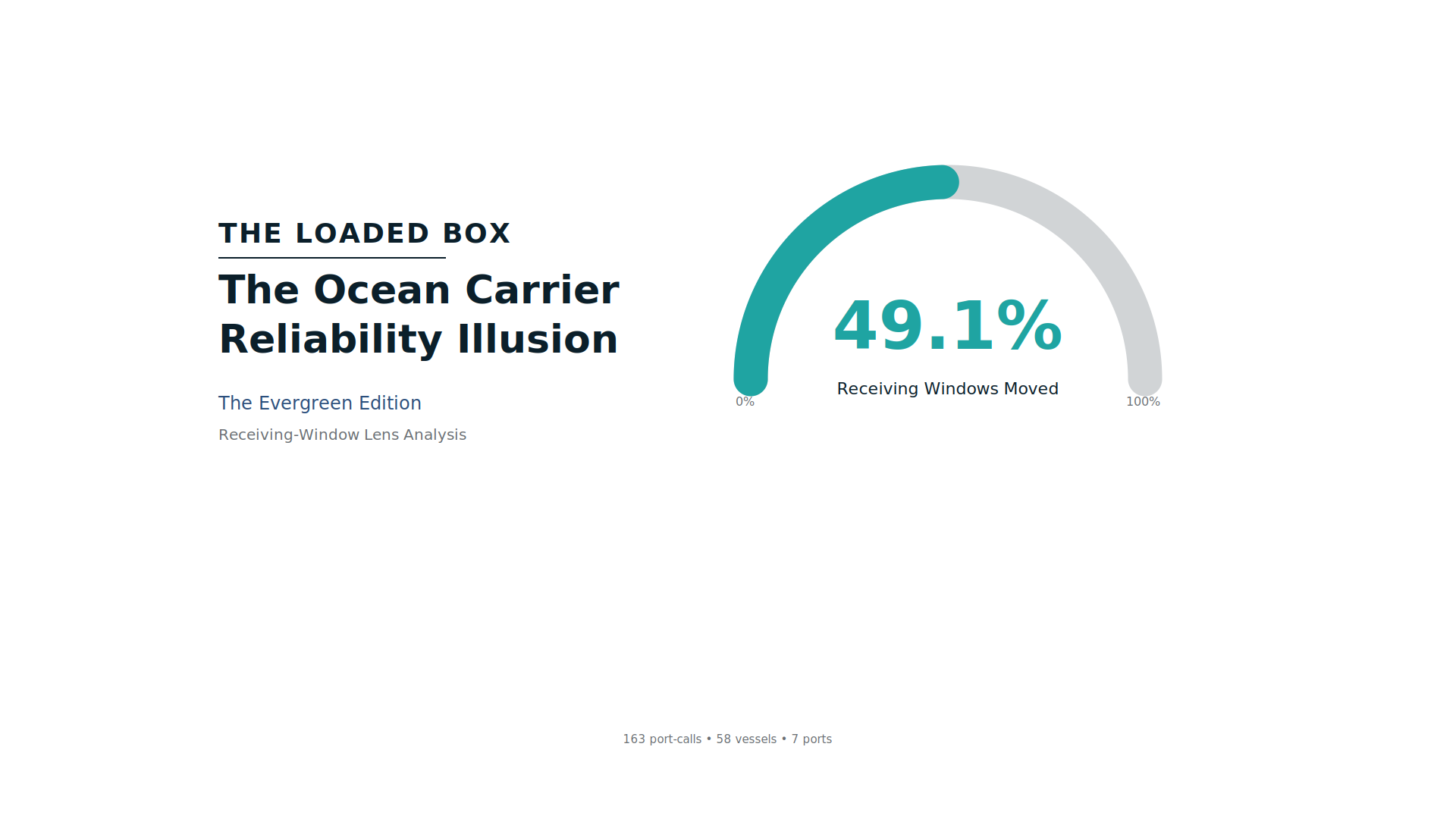
Understand how Evergreen's vessel schedule reliability impacts export execution, focusing on the volatility of receiving windows, and why static buffers often fail to manage these changes effectively.
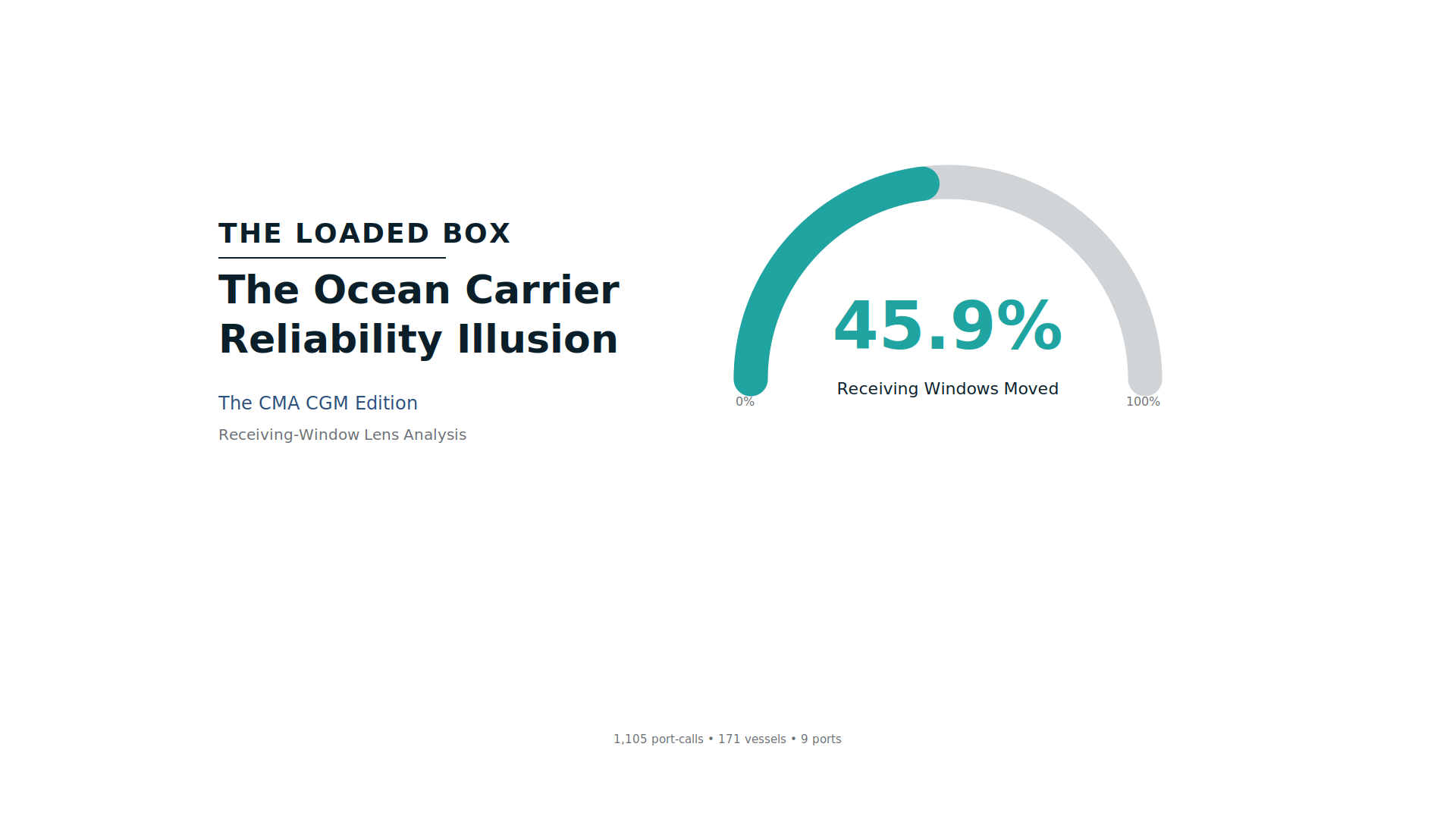
Explore how CMA CGM's vessel schedule reliability impacts export execution, focusing on receiving window shifts and their operational consequences in global trade.
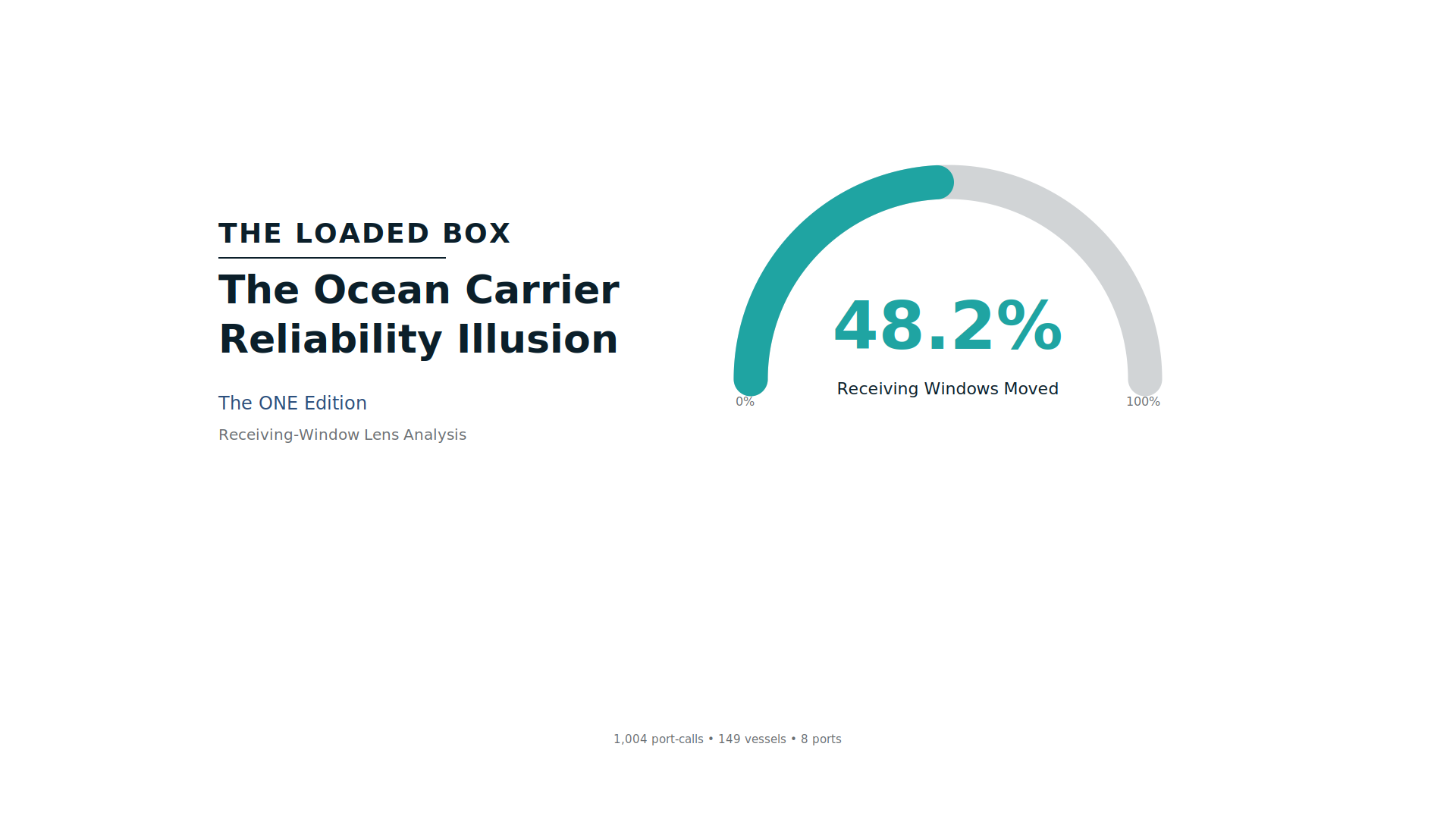
Explore how vessel schedule reliability impacts export execution, focusing on ONE's performance, port volatility, and the challenges of static buffers in dynamic environments.
Redefine the role of exceptions in global trade schedules to better manage export operations and make timely decisions amidst continuous changes.
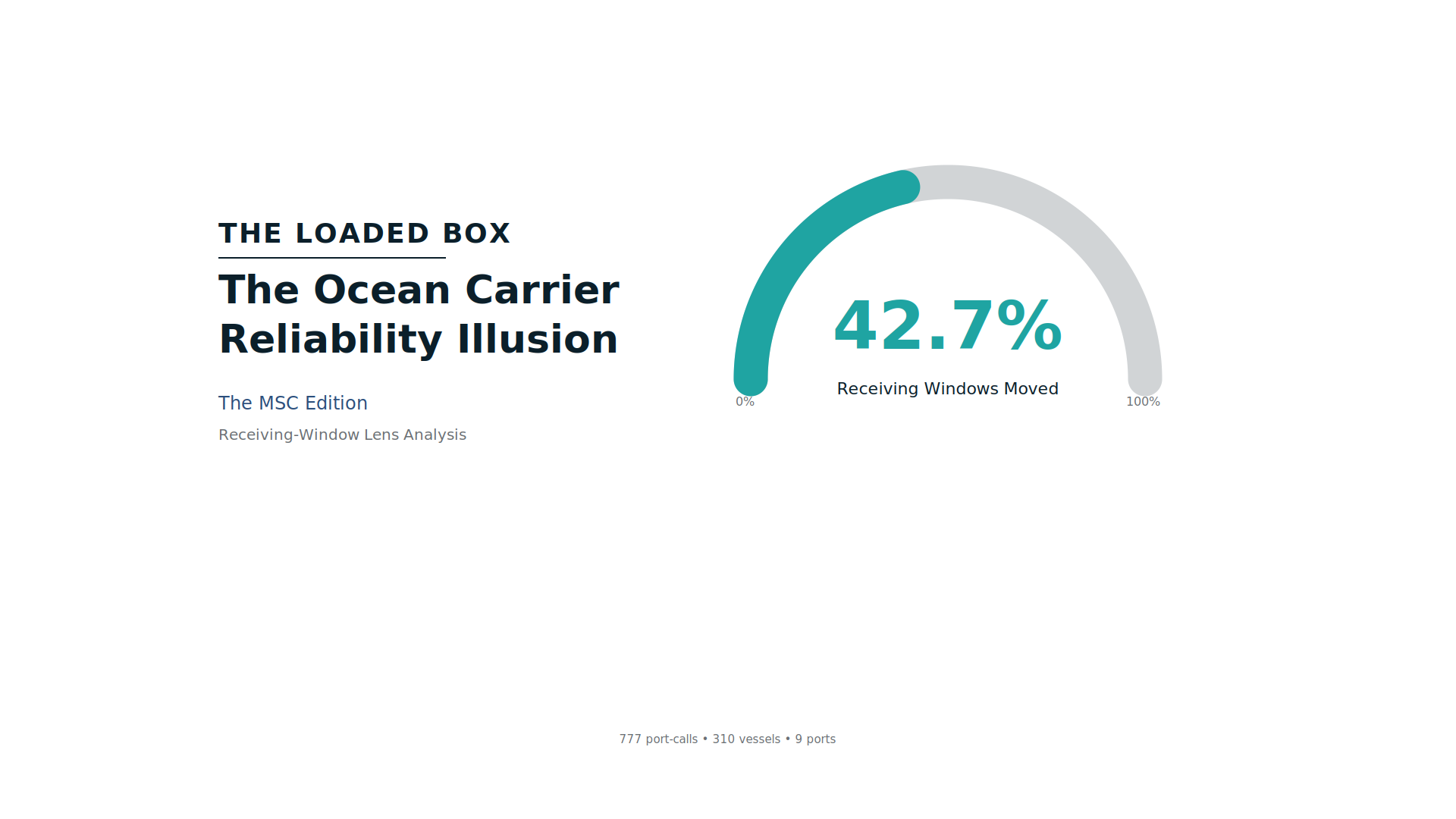
Discover how MSC vessel schedule reliability impacts export execution, focusing on receiving window stability, drift, and late-stage changes for better planning and risk management.